27 sept 2013

Avenged Sevenfold "Coming Home" analysis

"I've been away
Searching for a reason
Another purpose to find
I've sailed the seas
Fought my many demons
I've looked to gods in the skies

I've stood in hell
Where many had to suffer
I stared the devil in the eyes

Walked many roads
To witness ancient idols
And found the great Gates of fire

Had many stones
Question my conviction
Gave on these reason to rise?

The hate I'm searching
For bones he can borrow
while eyes gift in the night?
Final plight

Live again
All roads end
I'll be coming home
Tend your light
Cause on this night
I'll be coming home

Escape the hell
Of capitulated mortals
And drink the blood of a king 


A desert rain
has washed away direction
Had angels looking after me
So it seems

Live again

All roads end
I'll be coming home
Tend your light
Cause on this night
I'll be coming home

My story ends

Not far from where it started
My weary limbs have grown old
I've seen the world
Through the eyes of a known man
Home is where the heart is
I've been told
So I go

Live again

All roads end
I'll be coming home
Tend your light
Cause on this night
I'll be coming home

I'm coming home"

Coming Home - Avenged Sevenfold - Hail to the King


The song dosn't follow a meter pattern. It's not pentameter, nor tetrameter, but it changes in every verse. The rhyme is free in most part of the song, but in the chorus. "again, sin, light, night" 
The meaning under the lyrics is a man after the war, that have seen horrible things, and now he is asking for another chance to go home again and later, when he is old, he remembers what he did and how he felt.
The clues that let us identify he saw horrible things during the war are: The second and third stanzas I've stood in hell
Where many had to suffer
I stared the devil in the eyes
Walked many roads
To witness ancient idols
And found the great Gates of fire"

He stood in a place as painful as hell, he saw the most evil thing straight through. Was lost, and when he found a way, he found that he was in hell.

The comparisons he uses, comparing devil and hell to he horrors of a war, gives us a image on our head about the atrocity lived by the story teller. Also, the enjambment on "A desert rain
has washed away direction"
Is a way of enlarging the time in which he was on this "desert".

In "And drink the blood of a king" the sound "k" on "drink" and "king" make an consonancy effect.

"I've sailed the seas" Again, the sound "s" on "sailed" and "seas" conform another alliteration.
The repetition on "I'll be coming home" could mean the representation on the time he spent on the trip towards home.
Finally, My weary limbs have grown old  suggests that the story teller is already old, and that this happened long ago. This final synecdoche refers to his limbs to refer to himself, as an old and used man.

2 sept 2013

Dipity timeline

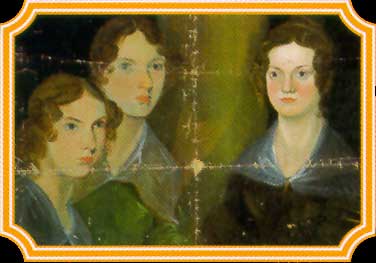
Here is the link to a timeline about Charllote Bronte's life
http://www.dipity.com/phamtom/Charlotte-Brontes-life/

30 ago 2013

Jane Eyre: Chapters 5-6-7-8

1. Imagine that you are falsely accused of stealing someone’s wallet at school. Your accuser is a credible witness, believed by your peers. Do you insist on your innocence and try to prove it? Do you confront your accuser? How do you live with the disapproval of your peers? Is the knowledge of your innocence enough to sustain you? Write a reflection statement referring to these questions.


  • 2.What is your opinion of Mr Brocklehurst’s philosophy of education?
  • 3. Compare Jane Eyre to other mistreated heroines from children’s stories (Cinderella, Rapunzel, Snow White). Knowing that Jane Eyre is the novel that broke many rules about how a mistreated heroine should act, compare and contrast them to Jane.


  • </ br>
    ANSWERS
    1. All the effort I've done to be accepted in my circle would be in vain. In all my years at the school lots of effort had been placed into making friends and kind relationships. I would confront my accuser, I would prove my innocence one way or another, meaning taking this to the law if necessary.  
    2. Now, this is considered a barbarity, but for that time, he was no other than a normal teacher. I think that if he learn that way too, it's normal to treat people the same way. I don't support it, but I understand it.
    3. These heroins had something Jane does not have: a fairy or magical creature that help her succeed in the world. In this case Jane needs to make the magic in order to fight her way out of injustice.

    Jane Eyre: Chapters 3-4-5


    1. How would you describe the relationship between Jane and Mr Lloyd? How do you think this affects her?
    2. How did Jane’s character changed in her confrontation with both Mr Brocklehurst and Mrs Reed?
    3. What is your first perception of Lowood School? What do you predict for Jane’s future at Lowood?


    ANSWERS:
    1. Jane was surprised that Lloyd was so kind to her. When Lloyd says "well well who knows what would happen" it's the first time Jane hears a kind joke towards her.
    2. Jane gets consumed by rage. She develops the feeling of vengance and hate being still very young. What she says to mrs Reed is an example.
    3. Lowood School seems like a dark place to me. The way Brocklehurst believed Mrs Reed about Jane being a liar makes me believe that the treatment to her at the school won't be better than at home

    26 jul 2013

    An Introduction to Charlotte Brönte and “Jane Eyre” part 2

    1. Who is said to have influenced the sister’s lives and WHY?
    The father. Since they were young, he shaped their minds to be writers.

    2. What tragedy struck the Brönte family?
    Their mother died. After this, the three sisters died before their father.

    3. What’s the Brönte father’s background?
    The father studied at Cambrige university. He was part of a wealthy family and the house they live in now is the biggest he had ever lived in.

    4. How is it said that Emily Brönte coped with homesickness?
    She wrote poetry and leave all her emotions on the paper.

    5. What is Haworth described like in the times the Bröntes lived there?
    This was the times of the industrial revolution. Gothic style buildings were the man type of building you can find.

    6. What is a recurrent theme in Charlotte’s writing (based on her experience as a child)?
    The lost of her mother and the rupture of the family due to that.

    7. How did the Brönte father try to salvage the situation with his family after his wife’s death?
    He tried to marry three times. It was hard to him because of the amount of daughters he had.

    An Introduction to Charlotte Brönte and “Jane Eyre” part 1

    1st task: Make a paragraph staring at the images that surrounded the Bronte's family.


    Mixing cathedrals and graves is a mistake. Big desolated fields indicate a similar feeling to a peaceful death, the opposite of what a grave offers. Graves are surrounded by sorrow, sadness and dark, gloomy emotions. You can't be happy and free on a graveyard, unless, of course, you are under the ground; finally free after a hole life of horrors and pain.

    24 jun 2013

    Written task

    This is an interview on a tv show between a journalist and a graphic designer about a new container for a product.
    Fred: Journalist
    Mike: graphic designer

    This is a transcription from the interview in the tv show


    • Fred: So! here we are! welcome to another episode of your favorite night news tv show,   Fredview. We have here today our very special guest Mike West, who is going to tell us something about his brand new work, this new container for the old chocolate cookies we all know and love. Tell us Mike, which is the advantage on changing the package of the same product?
    • Mike: well thanks Fred, hello everybody. Ok, people get bored, interests change, they minds want a little more exploration. We can see this on little children, who always want to test new things and interact with the world. If children last year were interested in the world football cup you want to change your cookies to look like footballs, for example, in order to make them look more attractive. You make an study on what are children interested now, and we saw that the entries on zoos are blowing up. We think this may be caused by some tv cartoon about animals that is growing popular and children are asking their parents to take them to the zoo. Also, this year we will have the Olympics, so, I've created a package where we can see animals making pole vaulting, running, and making different sports.
    • Fred: You said children wanted to test different things. Why would you put the same things they are surrounded by then? I mean, if children want different things, and they have the Olympics and like animals, I would have made a package that doesn't contain that, so they can test something new.
    • Mike: Right, you can't control what children will like, I'm speaking about long term periods when referring to interest changes, a year maybe, in which children will be attracted to different things. Now they are attracted by that, so we adapt our mediums to let that attraction benefit us.
    • Fred: What is exactly "that medium" you talk about?
    • Mike: Medium is the instrument of communication that lets you inform and tell something to the public. <[English A: Language and Literature course companion book page 158]> You need to understand how mass communication work. Look, who sends the message? The communicator, and that message says something. That message needs to be inside a medium, a channel, a way in which the receiver audience can get to it to cause an effect. I this case, I am the communicator, the message it's that this product is fun and can make children feel comfortable buying and consuming this as it "likes" the same they do. The channel is the sight, the pictures. You will find no word in the container that says something about that the package likes the same you do, but children will understand that by the pictures. The receiver, the audience, is of course the children, and the effect you want to cause in them is to feel identified by the container, to understand the message.
    • Fred: I know that in mass communication you always want to have feedback in order to upgrade your chances of having a better experience with your public. How do you recieve this feedback when creating a snak container?
    • Mike: Well, yes, I totally agree with you, feedback is essential when producing advertisement and mass communication elements. We do have a webpage with a forum and a comment section, but as it's to be expected, no children is going to access to the webpage of a cookie to say they liked it. The most relevant feedback we have is just the fact that every time we change the physical look of a product, our sales increase in a 12-14%. This shows us that they really like it and we have here a positive response and that they feel comfortable with it.
    • Fred: apart from just including characters they like, is there anything else you can do to make children feel more close with the product?
    • Mike: There is were rhetorical strategies come in scene. You have to make the difference between products that want to inform from products that want to persuade. I need to have clear the fact that I want to persuade. I need to pay close attention to elements like register, genre and style a consumer likes. While they are many ways of convincing us through language acts like tone, color, sentence length, etc, is the ability to combine this things what is able to persuade the public at the end.
    • Fred: I... well... I need to admit that I didn't understand your explanation. Can you give us an example?
    • Mike: There are things you can combine and strategies you can use. The most common is the "give me three" technique. When saying three things, people get attracted. In the US, the declaration of liberty was "Life, liberty, and the pursuit of happiness". Julius Caesar used to say "Veni, Vedi, Vici". That's the reason why you see in our product an elephant saying "Take, eat, do!" This means: take a cookie, eat the cookie, and now you will have the ability to do all the things the animals are making in the picture. Though, none of this is being said by words. That is an example of a rhetorical strategy.
    • Fred: any other examples?
    • Mike: when you have fat free products, you want the container to be green and white, ad have leaves and different elements from nature. This way, people buying it will think it is a natural product, when usually, fat free things are even more "toxic" or contain more chemicals than normal products.
    • Fred: Ok, thanks you Mike, I wish you luck with your product.
    • Mike: Thanks you Fred, goodbye, have a good night.


    RATIONALE:
    The reason of making a transcription from a tv show is that the ideas flow much faster and it's easier to understand. Without having the necessity of making a description of the place (like in a story about the topic),  the words can be used more efficiently and more information is given and shown with the same amount of words.
    I used characteristics that are typical from improvised dialogues. This can be seen in segments like "Fred: I... well... I need to admit that I didn't understand your explanation." Fred needs to think a moment about the answer for a moment. Something similar happens in the next segment "Mike: Right, you can't control what children will like" That "right" at the beginning it's a sign that shows a construction of an answer, a thinking process coming from the thinking of improvising.
    Apart from all this, Mike it's a professional graphic designer, this would explain and give more seriousness about what he is saying (he knows of what he is talking about because he studied a couple of years at university, he IS the font of information.

    Another aspect of the work, is that the register of the language that is being used is an informal, cult register. This is, again, caused by the improvisation used on a formal occasion. This is shown in sentences like "Now they are attracted by that, so we adapt our mediums to let that attraction benefit us." The use of the world "that" is lack of specific language, caused again by the improvisation and dialog creating in the moment. At the same time though, the same sentence uses the word "medium", showing the background knowledge of the Mike.